Before you buy another tool, draw how a lead becomes a sale
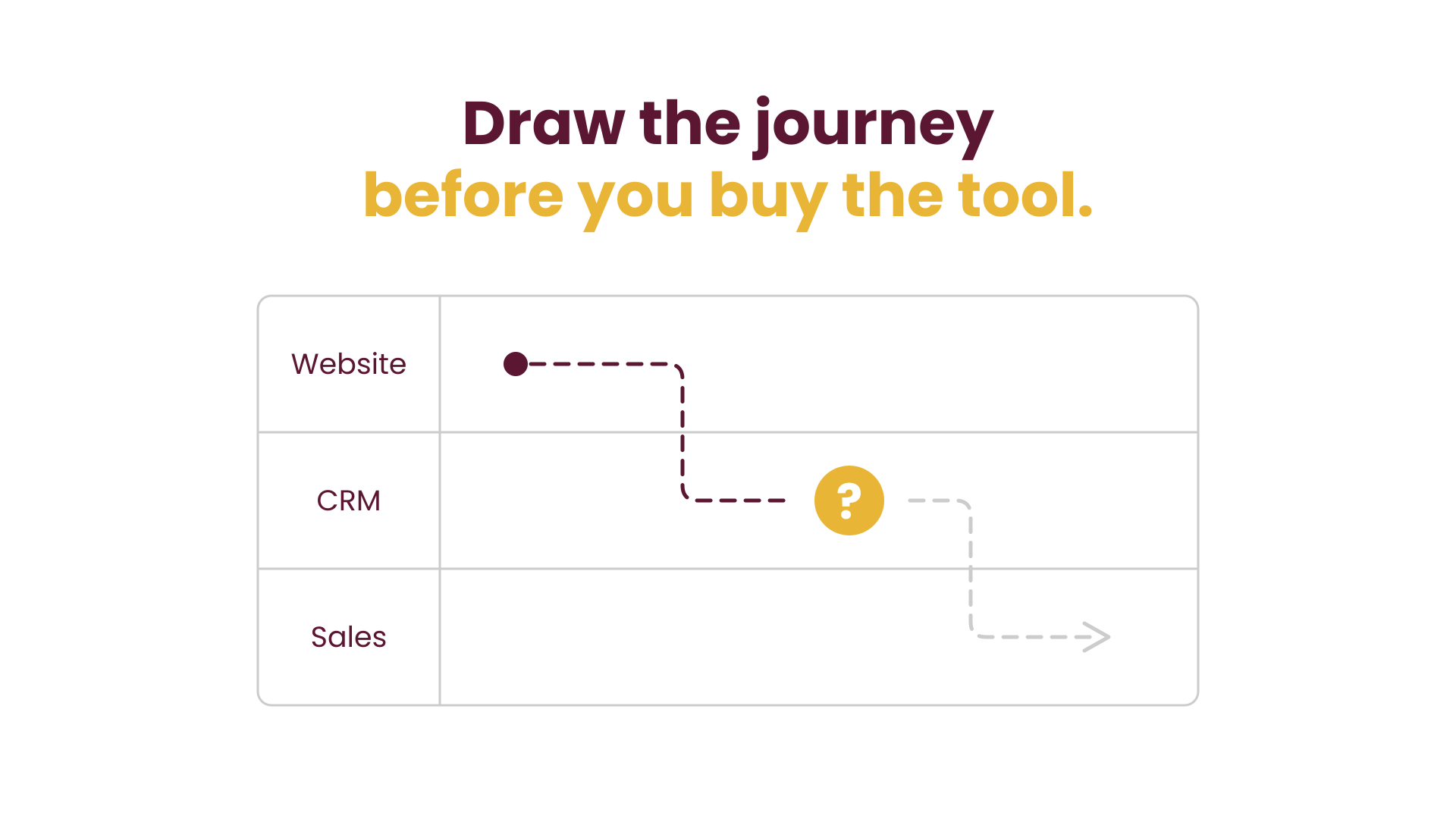
Most founders want to fix their marketing by adding something: a new tool, a new channel, a new hire. I start somewhere less exciting. Before anything gets bought or built, I draw how a lead actually becomes a sale.
Mapping is one of my favourite parts of the job. I look at the systems, talk to each team, check what the technology can really do, and agree what should happen. It works the same way whether I'm building from scratch or fixing what's already there.
It never stays on one straight line. The conversation branches into what-ifs, uncovers scenarios nobody had considered, and usually pulls marketing, sales and operations into the same room. That alone is worth the afternoon.
The output is a shared picture of how a lead moves from first contact to sale.
What goes on the page
What the drawing looks like depends on the systems a company already has, but it usually becomes swim lanes: one per system that touches the lead.
It starts with where a lead comes from: LinkedIn, the website, an event, a referral, etc. Then where that information goes. If someone fills in a form on the website, does it land in an inbox for someone to copy into the CRM, or does it go straight in with a tag or property attached? Most of the time it ends up in some kind of database: a CRM or a spreadsheet. Hopefully not a mailbox.
Then the questions get more interesting. Now that it's there, what do you know? Do you need all of it? What is missing, and should you ask for it at capture, or find out later on a discovery call? Could an enrichment tool fill it in instead of asking at all?
That last option is a useful test. Enrichment tools charge per record or per field, and once every data point has a price tag, you think twice about which ones you really need. The question changes from "could this be useful?" to "what will I do with it?": qualify the lead, personalise the follow-up, or segment them later. If the answer is nothing, don't collect it, even when it's free. Most systems I look at are full of fields nobody uses: filled in once and never looked at again, or quietly left blank.
Finally, how does a record move from one status to the next, and from one system to another? What information does that need, and what triggers it? Some companies use lead scoring: each action is worth a set number of points, and passing a threshold sends the lead to sales. Others use fixed criteria, such as company size, revenue or budget. Either way, the logic is the same: agree what has to be true before sales picks up the phone.
What people say versus what they do
Depending on how complex things are, this can take a while. You may need to talk to several departments and shadow people to see how they really work, which is often not what they tell you they do.
That gap matters. If people aren't following a process, it is rarely because they are difficult. It is usually because the process was designed without thinking about the people using it. You need to find the friction before you can remove it.
What mapping reveals
One map I remember well was for a B2B2C platform that sold through partners, who then put their own clients on it. They had a website, a CRM that was really an address book, spreadsheets where account managers tracked partners, the platform itself, and a separate portal where partners could pick up collateral.
Drawing it showed something more important than the missing integrations: nobody owned the journey from "partner signed up" to "partner actively selling."
The first gap sat between signing a new partner and properly onboarding and training them. When a large batch of sign-ups arrived, the team handling them couldn't keep up. Those partners had nowhere to sit except a few spreadsheets and email threads.
That created a second gap: between the number of partners who had registered (free for them to do) and the number actually putting clients through the platform.
The map didn't solve that on its own, but it made both gaps impossible to ignore.
Another map, for a renewal sequence, looked simple on paper and wasn't. Depending on their tier, someone who didn't renew might drop to a free tier for a year, and the business wanted to win them back. Did they renew before the date, during the reminders, or afterwards with a promotion code?
Mapping it showed that the website couldn't pass the customer's tier to the email platform. So everyone received the same onboarding sequence, including people who would just renew. Once the tagging was in place, each tier could receive relevant emails. That opened the door to upsells and made sure customers understood what their subscription included.
Both maps had one thing in common. Everyone assumed something was happening: partners were being onboarded, customers were getting the right emails. They weren't, and nobody knew until we checked.
What counts as a good lead?
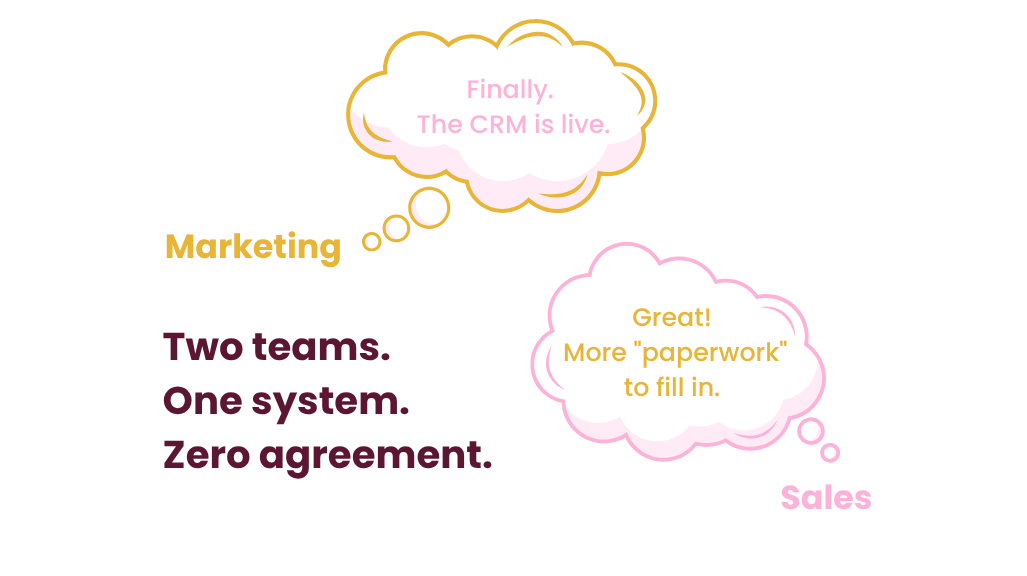
This is where marketing and sales most often disagree, so the first job is to sit down together and agree what a good customer looks like.
If you have sales data, start there. Look at the customers you already have and work out which ones were actually worth winning. A small deal that closed quickly with little sales time can be worth more than a big one that dragged on for months. Or the big one turns out better because the customer stayed for years. Once you know which kind of customer you want more of, a good lead is simply one that looks like them.
Then agree the handover. Marketing decides a lead is worth passing on from what it can see before anyone has spoken to them: do they fit the criteria, and how have they engaged? Sales then has a real conversation and confirms whether there is a need, budget, the right person and a timeline.
Those are two different judgements, and most arguments I've seen come from treating them as one. Sales sometimes feel they should only receive leads that are ready to convert, but a form can only tell you what people choose to say. You can ask about budget or their role in the decision, and some will answer honestly, some will guess, and some will tick whatever gets them the download. Confirming it in a real conversation is part of the sales job.
What makes it work is the loop back. When sales turns a lead down, the reason gets recorded, and marketing adjusts the criteria or, if you use lead scoring, the weighting.
The funnel is getting darker
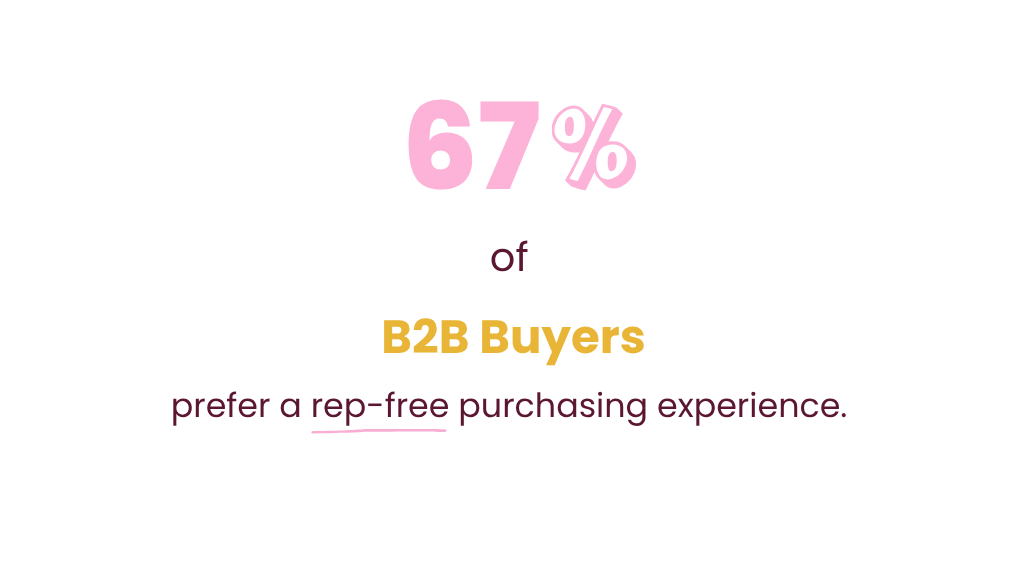
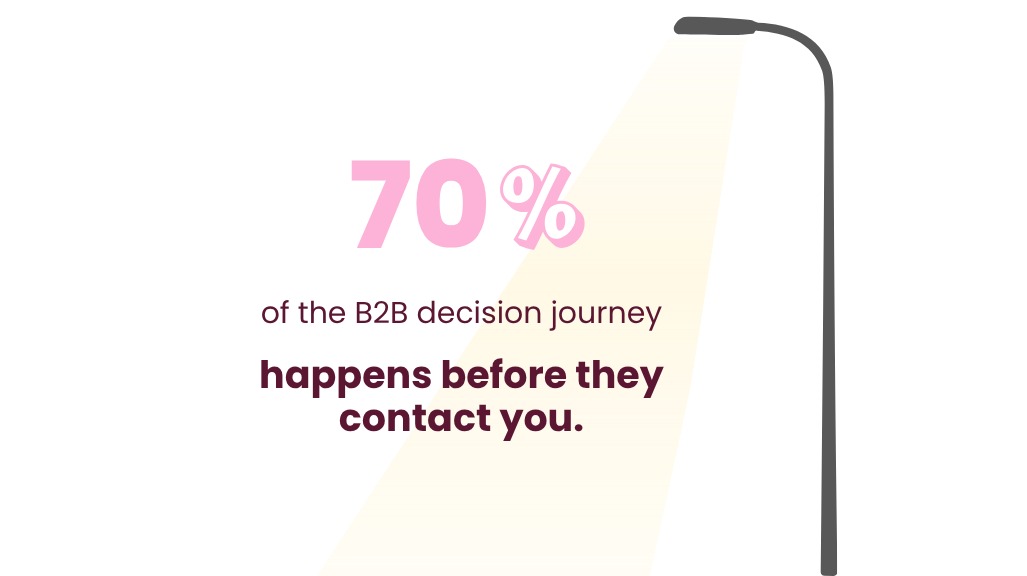
That first judgement is also getting harder. More buyers now do their research through AI answers and other people's content without ever clicking through to your site. The downloads and page visits marketing used to score happen out of sight.
People turn up later, sometimes straight at "book a call", already halfway to a decision. Counting marketing-qualified leads tells you less than it used to.
That puts more weight on what you can still control: clear fit criteria, asking people how they found you, and a handover that works the moment they do appear.
Why before the tool?
A tool should help you move leads to the next stage. If you haven't defined the stages, you might end up with one that can't do what you need, or one that needs a thousand fields filled in before it triggers properly, which you probably don't want either.
If you want to start this week, take one page and answer five questions:
- Where does a lead arrive?
- Who sees it first?
- What happens next?
- When does sales take over?
- What counts as a good lead?
Where you can't answer is where leads are quietly going cold. Draw that first.
Once the journey is mapped, the next job is to close the gaps between the systems and people inside it.