Visibility is not the problem. What happens next is.
Everyone is talking about visibility. Show up more. Post consistently. Be seen.
And yes, if nobody knows you exist, none of the rest matters.
But here’s what doesn’t get said enough: visibility without a clear path forward is just noise. You can be everywhere and still convert nothing.
The question isn’t just “are you visible?” It’s: visible to whom, at what moment, and then what?
Being visible is not the same as being noticed
Think about the last event you attended. Every person in that room was visible. But the ones you remember? They said something that connected with exactly where you were. They weren’t louder. They were relevant.
Online, it works the same way. Posting every day makes you visible. Saying the right thing to the right person at the right moment gets you noticed.
A billboard on the motorway is visible. But if you’re not in the market for a car, you don’t see the car ad. Not really.
Visibility looks different at every stage of the journey
Most people treat visibility as one thing. It isn’t.
Your potential clients don’t go from discovering you to buying from you in one step. They move through stages, and what they need from you at each one is completely different.
Awareness — they know you exist
At this stage, your job is simple: stop the scroll. Spark curiosity. Introduce yourself.
A reel that teaches something useful. A post that says what everyone is thinking but nobody is saying. A recommendation from someone they trust. This is top-of-funnel visibility and it works best when it’s generous, not salesy.
What doesn’t work here: going straight for the sale. They don’t know you yet. You haven’t earned that.
Consideration — they think you can solve their problem
This is where most businesses lose people without realising it.
At this stage, someone is actively looking for a solution. They’re Googling. They’re reading. They’re comparing. They’re not scrolling Instagram for inspiration; they’re searching for an answer.
This is where SEO matters. This is where your website either makes the case for you or loses them to someone whose does.
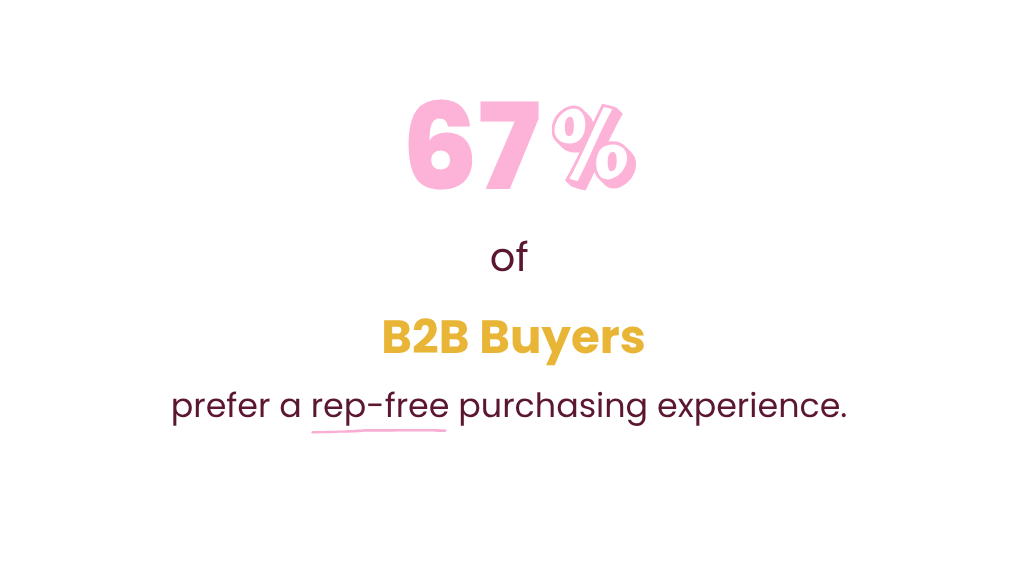
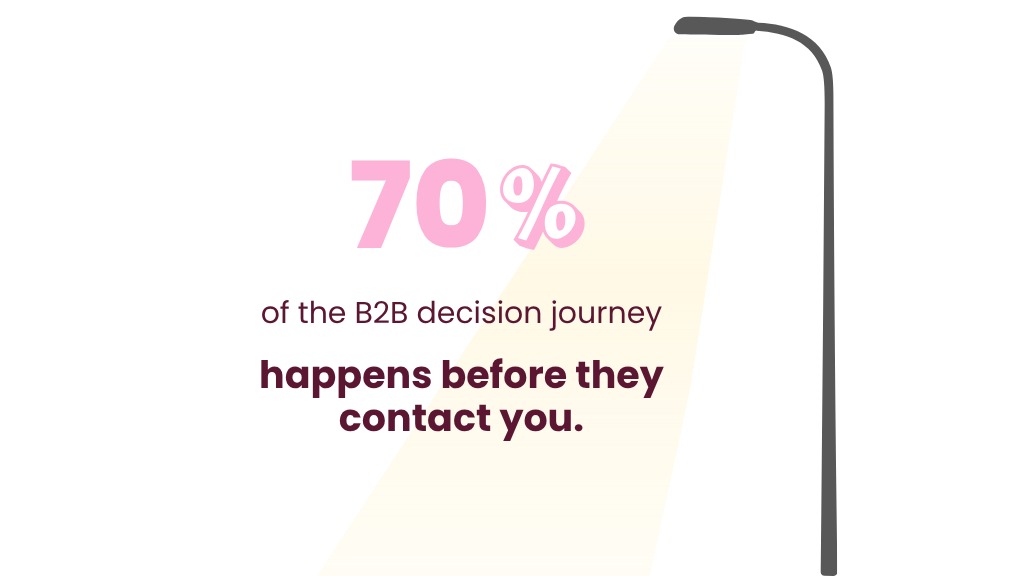
Here’s the stat that should stop you in your tracks: b2b buyers complete roughly 70% of their decision journey before they ever contact you. By the time someone reaches out, they’ve already read your website, checked your LinkedIn, looked at your reviews, and formed a view. The decision is nearly made.
So what are they finding when they look?
Purchase — they’re ready to act
At this stage, your job is to get out of your own way.
Remove friction. Make the next step so obvious they can’t miss it. One clear action — book a call, shop now, get in touch — not five options and a confusing menu.
This is where so many brilliant, visible people lose the sale. Someone lands on their website ready to buy, and there’s no price, no booking link, no clear next step. So they leave. And they book someone else.
Different channels have different jobs
The mistake is using every platform the same way, or expecting it to do a job it wasn’t built for.
Note: this is a simplified view. In practice, channels overlap and the right mix depends on your business, your buyers, and where they spend their time.
- LinkedIn builds professional credibility, not just through posting, but through showing up in the right conversations. For B2B and professional services, this is your primary channel.
- Google, SEO, and AI search captures consideration. It’s where people actively search for solutions. Your buyers are here when they’re ready to act.
- Your website is where decisions are made. It is the only conversion tool you fully own.
- Email retains. It keeps you front of mind with people who already like you.
- Social media builds awareness and trust. Powerful for consumer brands, supporting role for B2B.
Social media is rented land. Your website is the only real estate you own online. Build there first.
The thing most people skip
Having mapped visibility to the funnel is only half of it. The other half is asking: Have I actually thought about what I want someone to do at each stage?
Most people haven’t.
They post, they get seen, and then there’s… nothing. No clear path. No signposts. No next step. The visibility was real. The opportunity evaporated.
Every piece of content, every page, every post needs to answer one question: what do I want someone to do now?
- Awareness post → follow, save, click the link, share
- Homepage → one clear action. Not three. One
- Blog post → related service, or sign up for emails
Map the journey. Then make the path obvious.
Your website: the practical bit
Since your website is where consideration becomes conversion, it’s worth getting it right.
The 3-second test
Show someone who doesn’t know what you do your homepage.
Give them 3 seconds. Close it. Ask them: what do I do, and who do I help?
If they can’t answer, that’s your homework.
What your homepage needs to do
Three things, in this order:
- Who you help — in their words, not yours
- What you do — the outcome, not the process
- What to do next — one clear action
Not: “Welcome to my world of wellness.” Yes: “Nutrition coaching for busy women who want to feel human again. Book your free call.”
Three things to do this week
Not a list of ten. Three.
- Read your homepage out loud. Does the first line clearly say who you help and what you do? If not, change it, now.
- Map your next step. For every piece of content you create, every page on your website, ask: what do I want someone to do now? Is that obvious? Is there a button for it?
- Google yourself, then ask an AI. See what comes up. See what doesn’t. That’s where to focus.
Visibility brought them to the door. Make sure the door opens.
If this resonated, get in touch.